Ñuble–Biobío
Posted January 23, 2026
A large-scale wildfire emergency began in mid-January 2026 across central and southern Chile, with the most severe impacts in the Biobío and Ñuble regions. Dozens of fires ignited nearly simultaneously and spread rapidly under extreme fire weather conditions, including prolonged drought, high temperatures, and strong winds.
More than 110,000 acres of forest, agricultural land, and wildland-urban interface areas have burned. Some assessments reported over 75 individual fires, with dozens active at the same time — creating a complex, multi-front incident environment for responding agencies.
Casualties and Evacuations
Authorities report at least 21 civilian fatalities linked to the fires, with dozens to hundreds of additional injuries. More than 50,000 residents were evacuated from threatened communities as fire behavior intensified near populated areas.
Property and Infrastructure Damage
Hundreds of structures have been destroyed, with estimates ranging from 325 to more than 500 homes lost in towns such as Lirquén, Penco, and nearby communities. Fires also damaged or destroyed vehicles, power infrastructure, and community facilities, further complicating response and recovery efforts.
Cause and Investigation
Official investigations remain ongoing. Several fires are suspected to have been intentionally set. Chilean police have arrested multiple individuals in connection with suspected arson, including one person reportedly caught igniting vegetation near a forested area. Extreme weather conditions — heat, drought, and wind — significantly accelerated fire spread.
Incident Command and Response Actions
Chilean authorities declared a state of catastrophe in the Biobío and Ñuble regions, allowing expanded emergency powers and enhanced coordination between civilian agencies and the military. Wildland firefighting operations are being led by CONAF (Chile’s National Forestry Corporation), working in coordination with local fire brigades, national emergency management agencies, and military resources.
Operations have included large-scale fire suppression, evacuations, structure defense, road closures, and aerial firefighting missions. International mutual aid has been activated, including the deployment of 145 Mexican wildfire brigadistas, with additional assistance pledged or coordinated from Argentina, Brazil, Uruguay, the United States, and other countries.

Tribute to Fire Crews
Sustained High-Intensity Operations
CONAF personnel have been operating at the center of the wildfire response, managing multiple large incidents simultaneously under extreme fire behavior conditions. Crews have worked extended operational periods in high heat and wind, conditions that significantly limit containment options and slow progress.
Command-Level Recognition
Chile’s president publicly stated that overnight fire operations performed “better than projected,” noting that fire crews — including CONAF brigades — were able to hold containment lines and slow fire spread despite adverse conditions.
Complex Incident Environment
Firefighters have faced numerous concurrent large fires across Biobío, Ñuble, Araucanía, and surrounding regions. This has stretched personnel, equipment, and aviation resources, requiring continual reassessment of priorities, rapid redeployment, and adaptive tactics based on weather, terrain, and fire behavior.
Overall reporting portrays CONAF’s performance as disciplined, coordinated, and resilient under extraordinary operational stress. Limitations have been driven by scale and weather rather than effort, training, or commitment.
Firefighter Safety Concerns
Firefighter safety has emerged as a serious concern during the incident. At least two attacks on fire crews have been reported. In one incident, a responding fire brigade reportedly came under gunfire. Police investigations are ongoing. President Gabriel Boric condemned the attacks, stating that “any aggression against firefighters is absolutely unacceptable” and that those responsible will be prosecuted.
Additionally, unauthorized civilian drone activity has interfered with fire operations. Near the town of Florida, drone flights forced the temporary suspension of aerial firefighting missions while fires were actively threatening the area. Authorities noted that such drones are often operated by journalists or hobbyists attempting to capture footage, but they pose a serious risk to aircraft and ground crews.
Other Responding Agencies
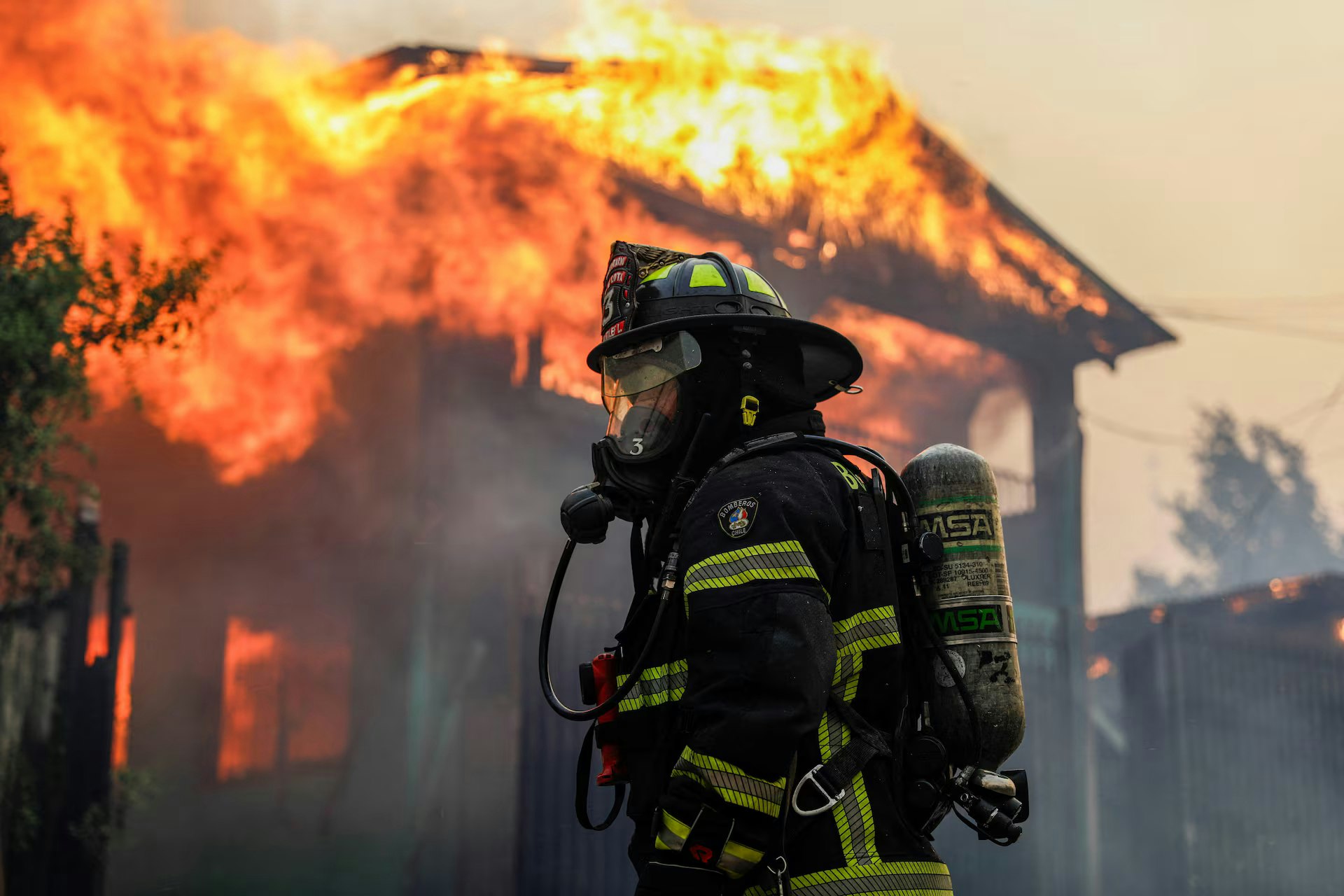
Chile’s bomberos — volunteer fire departments comparable to U.S. municipal fire companies — have played a critical role, particularly in structural firefighting and wildland-urban interface operations. They have worked alongside CONAF crews to protect communities, assist with evacuations, and conduct structure defense.
Under the state of catastrophe, the Chilean military and national emergency management agencies (SENAPRED/ONEMI) are supporting operations with logistics, evacuations, traffic control, aviation support, and infrastructure protection. International wildfire crews, including the Mexican brigades, are contributing specialized skills and additional staffing to high-complexity fire areas.
Community Impact
Residents of affected communities have been evacuated — often under curfews — and many remain sheltered in emergency centers. Communities are experiencing profound loss and uncertainty following fatalities and widespread home destruction. Local organizations, emergency communication networks, and volunteers are actively supporting displaced residents as suppression and recovery efforts continue.