Safety Near Icy Water
Above all, remember that no ice can ever be assumed to be safe.
Brrr. Combine Central New York’s long, frigid winters with its many lakes, streams, and wetlands, and there is definitely a need for everyone to know how to stay safe near ice and icy water. Additionally, there is a need for emergency agencies to be proficient in ice water rescue.
A wide range of situations can lead to ice rescues. People may fall through the ice while walking, skating, fishing, or snowmobiling. Children playing near frozen water may break through. Pets can fall in, prompting owners to enter the water in rescue attempts. Vehicles, ATVs, and snowmobiles can break through ice, and boaters or ice fishermen may become stranded due to shifting or deteriorating ice conditions.
Cautions On or Near the Ice
The Minoa Fire Department urges extreme caution, as no ice is ever completely safe. General guidelines for ice thickness include:
4 inches: Walking
5–7 inches: Snowmobile or ATV
8–12 inches: Small vehicles
For safety, avoid ice near inlets and outlets, moving water, bridges, vegetation, and areas of dark or slushy ice.
Ice Rescues
Ice rescues allow very little margin for error. They demand exceptional teamwork, constant communication, and strict discipline under stress. In many cases, responders must make life-or-death decisions within seconds.
Key Factors Triggering Rescue Mode
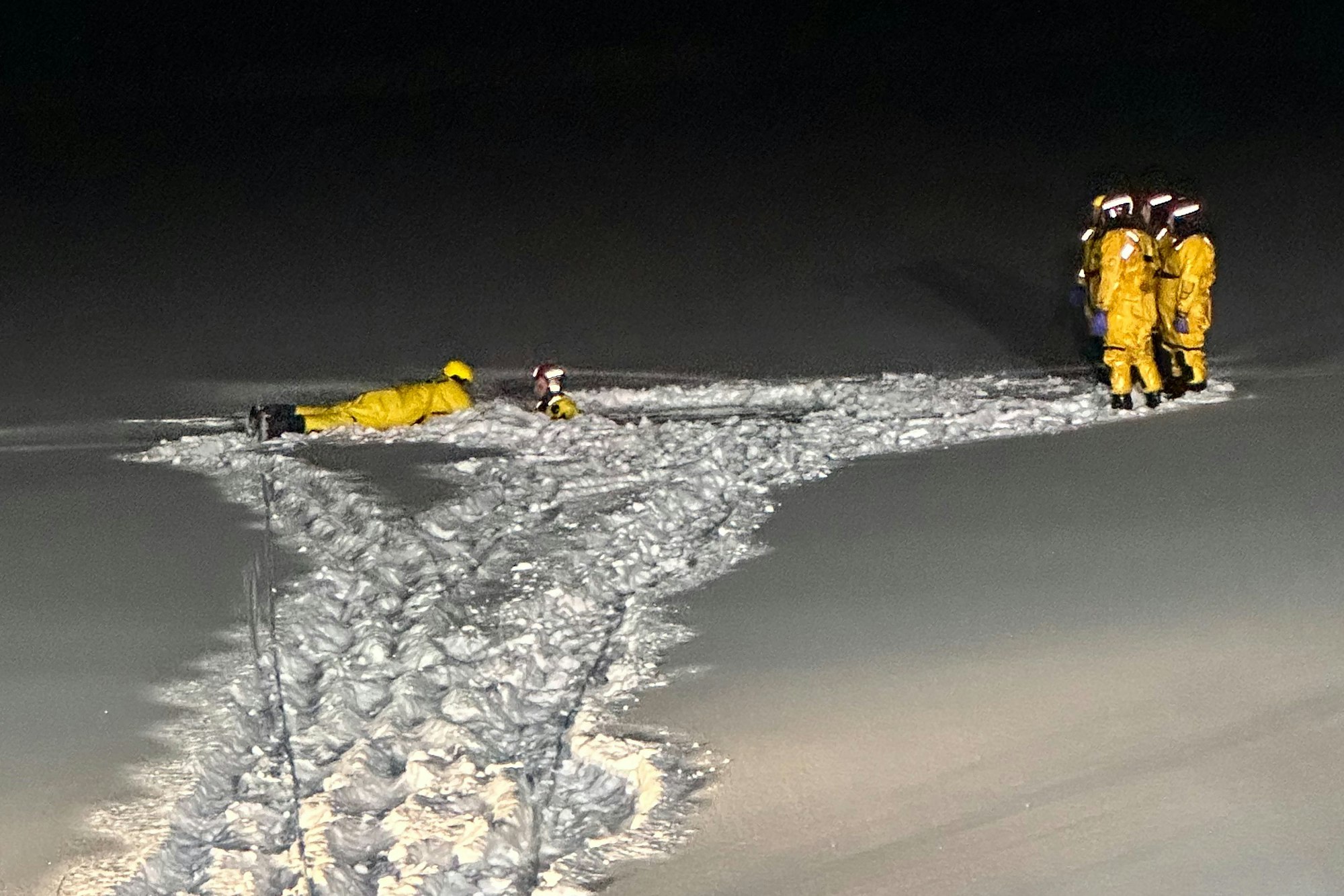
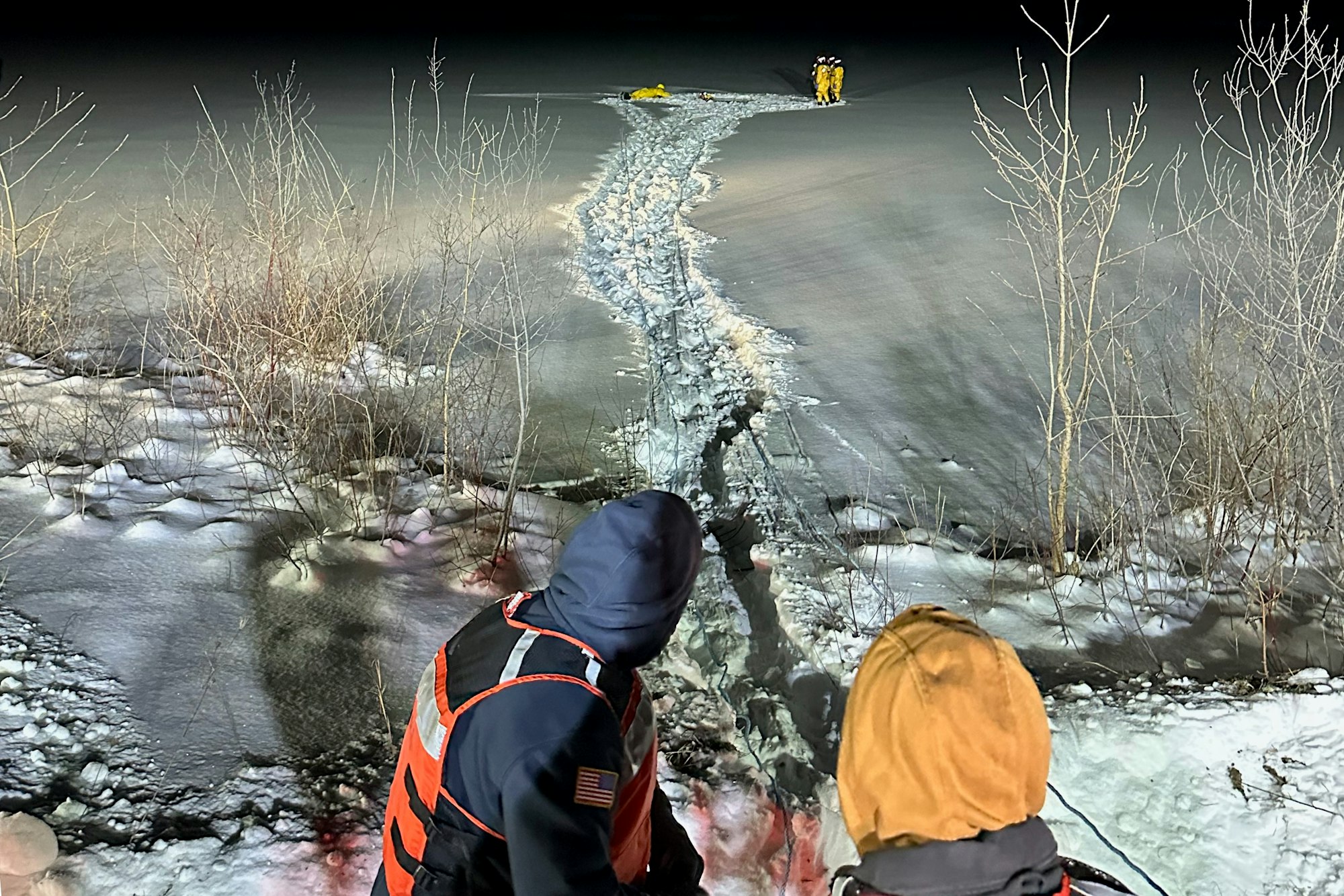
The Minoa Fire Department trains regularly for ice water rescues. These high-risk operations are typically initiated when:
- A victim is in the water or partially submerged
- A victim is stranded on unstable ice
- Water temperatures are typically 32–36°F
- The victim faces a high risk of rapid hypothermia and cold shock.
How Do Rescues Proceed?
Ice water rescues are carefully structured, risk-managed operations that rely on layered safety principles.
First, emergency resources are dispatched, including fire departments, EMS, law enforcement, dive teams when available, and mutual-aid departments with ice rescue capability. This first step is sometimes hobbled because the emergency call may have no specific address or location.
Second, responders rapidly assess the scene, locating the victim and evaluating ice conditions, weather, wind, and access points.
Third, rescuers attempt the rescue using techniques matched to the situation:
Reach: Extending ladders, poles, or other tools from shore or stable ice
Throw: Deploying ropes and flotation devices
Row: Using rescue sleds, boats, or boards to approach the victim
Go: A trained, fully equipped, and secured rescuer enters the water — the highest-risk option. Redundancy is critical, and no rescuer operates without backup.
In some instances in Onondaga County, the the Sheriff's aviation unit, the Air 1 helicopter, has assisted in rescues by locating and spotlighting the scene and even rescuing the victims.
Tactical Challenges of Ice Rescue
Ice rescues are among the most dangerous emergency operations. Ice strength is unpredictable, and cold water rapidly accelerates fatigue. Rescuers face the risk of secondary ice collapse, rapidly changing conditions, and physical exhaustion. Victims may panic and cling to rescuers, further complicating the rescue.
Final Safety Reminder
Ice rescues are dangerous for victims and rescuers alike. The safest rescue is the one that never has to happen. Stay off questionable ice, keep children and pets well away from frozen water, and never attempt a rescue yourself. If someone breaks through the ice, call 911 immediately.
The Minoa Fire Department trains year-round for these high-risk emergencies and stands ready to respond. Your awareness, caution, and quick action can help prevent tragedy.
Capt. Zach Van Auken contributed to this article.