Searsmont Lumber Explosion & Fire

A Lumbermill Inferno
Posted May 19, 2026
On May 15, 2026, a catastrophic fire and explosion occurred at the Robbins Lumber mill in Searsmont, a rural community in Waldo County in midcoast Maine. The incident began shortly after 10:00 a.m. at the long-established Robbins Lumber facility, a fifth-generation family-owned lumber manufacturer that has operated since the 19th century.
Initial reports indicate that firefighters were responding to a fire involving one of the mill’s silos when a massive explosion occurred during suppression operations. The explosion generated heavy smoke, structural collapse hazards, and additional fires across portions of the mill complex.
The event quickly escalated into what Waldo County officials classified as a “mass casualty incident,” meaning the number of injured persons exceeded the immediate treatment and transport capability of local emergency resources.
Scope of Damage & Casualties
The Robbins Lumber facility sustained major structural damage. Reports describe severe destruction to the silo area and adjoining mill infrastructure. Operations at the mill were suspended following the incident, and company officials acknowledged that the damage would keep portions of the operation offline for at least several days, likely much longer.
Casualties and injuries
As of current reporting, one firefighter was killed i the line of duty: Andrew Cross, age 27. At least 12 people were injured. The injured included multiple firefighters, EMS personnel, Robbins Lumber employees, and two members of the Robbins family ownership group. Several victims suffered critical burns and blast injuries. Patients were distributed among hospitals throughout Maine, with some transferred to trauma centers in Portland and Boston.
The incident also damaged responding fire apparatus from several departments, reducing local emergency-response capability after the event.
Cause (as currently known)
The exact cause remains under investigation. Investigators from the Maine State Fire Marshal’s Office, the Bureau of Alcohol, Tobacco, Firearms and Explosives (ATF), OSHA, and other agencies have been involved in the investigation.
Authorities have confirmed several important facts:
- The initial incident involved a fire in a mill silo.
- Firefighters were actively conducting suppression operations when the explosion occurred.
- The explosion happened while crews were positioned close to the involved structure.
Although officials have not publicly identified a definitive ignition mechanism, industrial wood-processing facilities are known to face serious combustible-dust hazards. Fine wood dust suspended in air can ignite explosively under the right conditions. At this stage, however, investigators have not officially concluded that combustible dust caused the explosion.
Actions of First Responders
The response was extensive and regional in scale.
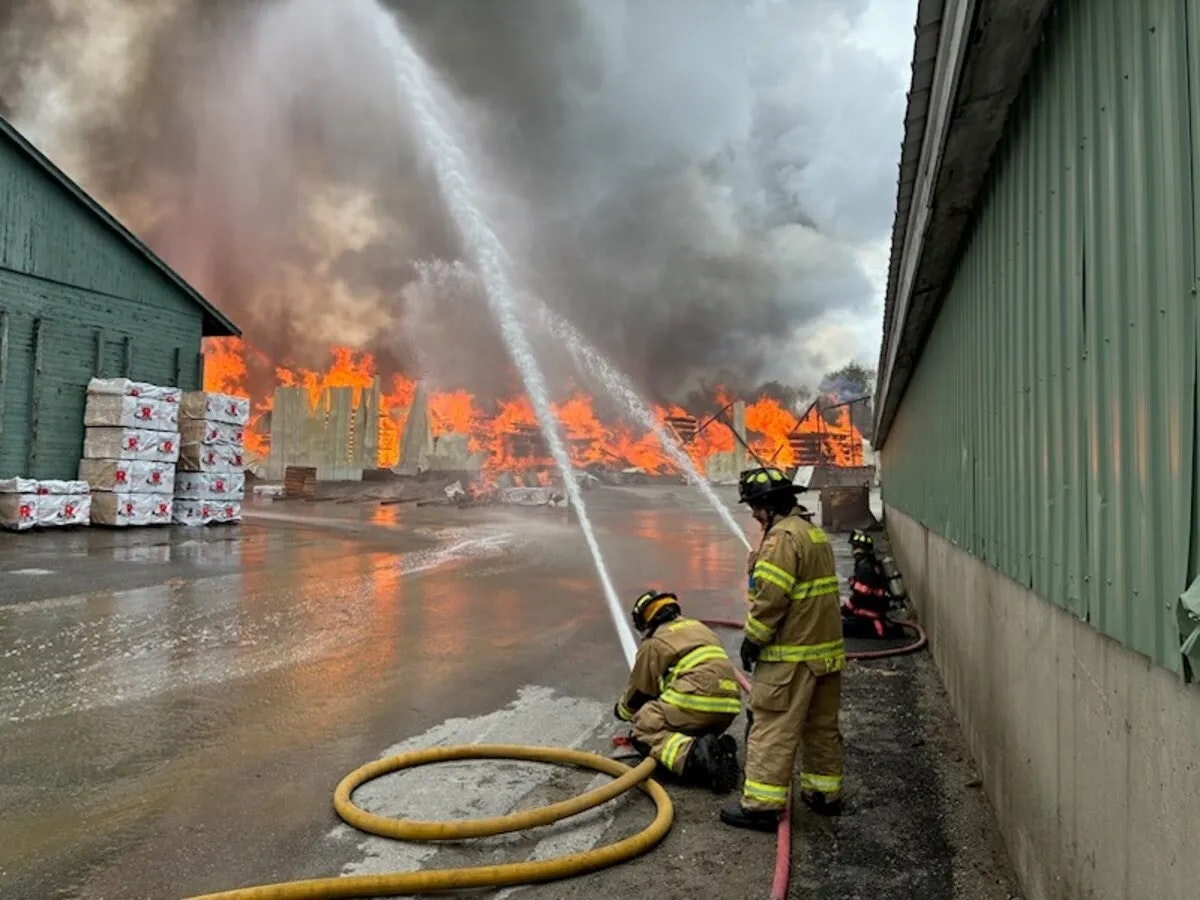
Fire Response
Fire departments from across Waldo County and surrounding communities responded under mutual aid. Approximately two dozen departments reportedly became involved during the incident.
Responders faced an active industrial fire, repeated explosion hazards, heavy smoke, damaged apparatus, and rapidly changing conditions.
Crews used master streams, aerial operations, tanker support, and helicopter resources during the firefight.
Multiple mayday situations were reportedly declared during the incident after the explosion injured firefighters and damaged equipment.
EMS Response
EMS agencies coordinated a large casualty-management operation involving triage, transport coordination, hospital distribution, and interfacility transfers to higher-level trauma centers. Hospitals in Portland, Bangor, and Boston ultimately received patients.
Law Enforcement and Emergency Management
Police and emergency-management personnel established road closures, perimeter control, scene security, and public-information coordination. State and federal investigators rapidly secured the scene due to the fatality and industrial-explosion component.
Support Organizations
The American Red Cross deployed disaster-action teams to support responders with hydration, food, cots, blankets, and logistical support.
Public Reaction to Responsse
Public reaction has been overwhelmingly supportive and appreciative of the emergency response. Political leaders across Maine publicly praised the responders. The death of firefighter Andrew Cross became a major focus of statewide mourning. Fire departments from across the region participated in ceremonial escorts and tributes honoring him.
The logging and forest-products community also strongly supported responders and victims. Industry organizations emphasized the courage of the firefighters and the importance of Robbins Lumber to Maine’s rural economy.
Most commentary has instead recognized:
- The extraordinary danger of industrial fires
- The sudden nature of the explosion
- The willingness of responders to operate in highly hazardous conditions.
Lessons Learned
Although the investigation remains ongoing, several operational lessons are already emerging.
Industrial fires can escalate instantly
This incident reinforced the reality that fires in silos, sawmills, woodworking plants, and dust-producing facilities can transition from “routine industrial fire” to catastrophic explosion in seconds. Combustible dust and confined-space fire behavior remain extreme hazards.
Risk assessment must remain dynamic
The event highlights the importance of continually reassessing collapse potential, explosion risk, changing smoke conditions, and firefighter positioning during industrial incidents. A structure that appears stable during initial attack may rapidly become unsurvivable.
Mutual aid matters
Rural communities depend heavily on mutual aid. Waldo County reportedly committed nearly all available regional resources. The response demonstrated the importance of interoperable communications, preplanned mutual aid, regional EMS coordination, and unified command systems.
Industrial preplanning is essential
Facilities such as lumber mills require detailed pre-incident planning hazard mapping, dust-hazard awareness, utility shutoff procedures, water-supply planning, and defensive-operation thresholds. Knowledge of silo systems and industrial processes can significantly affect tactical decisions.
Firefighter survivability and mayday readiness
The reported maydays and apparatus damage underline the need for rapid intervention capability, accountability systems, firefighter location awareness, and disciplined incident-command structure during chaotic events.
Emotional impact on responders and communities
Incidents involving responder fatalities profoundly affect volunteer fire departments and small communities. Long-term peer support, chaplain services, and mental-health follow-up will likely be important components of recovery for the departments involved.